The garden of our new house
27 Jan 2026 | #housing | #japanWe recently built our home in Tokyo with Ichijo. One thing that surprised me was that the house maker companies only build the house itself, and leave the outside construction to another company. This was the case with Ichijo too, so we had to arrange the garden with another company.
Our idea
Similar to most of Tokyo, our land is pretty small, so doesn’t leave that much space for a garden. We also wanted to have a few things:
- car parking for our minivan
- a cycleport (roof for our bikes)
- a mailbox with locker for parcels (宅配ボクス)
- some tree or other greenery, if possible
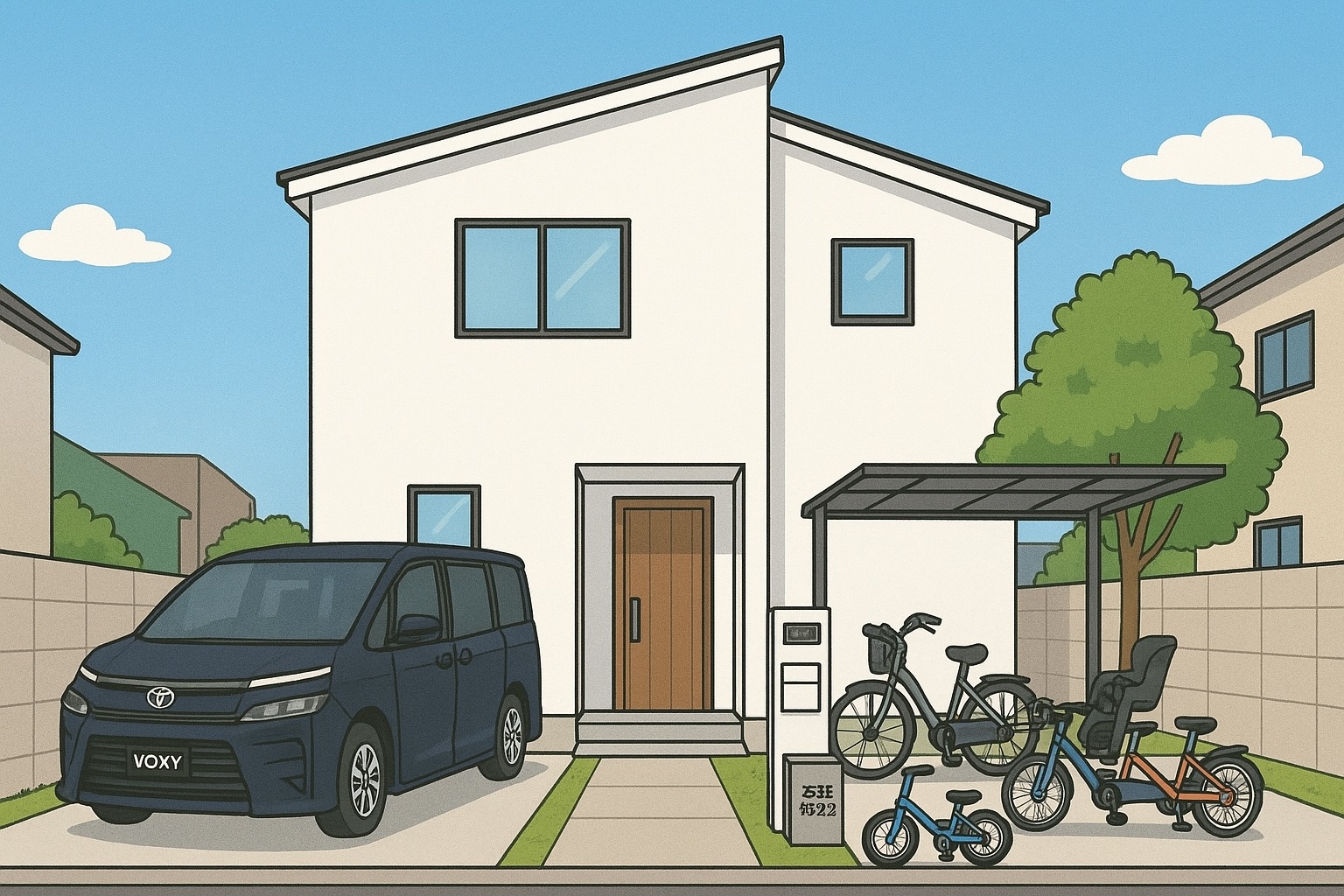
I thought this was a pretty basic idea. Later we learned that the “basic idea” is to have concrete in the front, gravel in the back, and call it a day.
Ichijo’s introduction
Ichijo told us that they will introduce their partner company that can handle the exterior construction work. I believe the usual flow is that they will finalize the house fully before connecting you with the garden company, but we asked to meet with them earlier as we wanted to add some external lights on the house and the placement of those would depend on the outside design.
I got the feeling that this company was really good at handling the simple requests (pour concrete in the front, add gravel in the back, install the interphone and mailbox near the entrance), but they weren’t well equipped to do design work with us, give us advice, or suggest alternatives. (Or maybe we just got unlucky with our contact person.)
Their first plan was already around 2 million yen, and once we asked for the additional things it quickly jumped to near 3 million yen. Also the topic of Musashino City being strict about garden structures came up and they essentially told us that no cycle port can fit the rules, so we either shouldn’t get one, or just risk getting caught. After I looked up the rules online and sent them by email, they finally sent us a design that included a cycleport (even though it was one with 4 legs instead of 2 that we requested). Overall our experience wasn’t good, so we decided to find another company.
On the other hand we have two friends who built with Ichijo, and they both went with the Ichijo-introduced company, and they were fine. So we might have gotten a bad sales person, or simply we had too many unfinished ideas that just needed a different style company.
The local company: Palgreen
My wife found a local landscaping company, Palgreen. We had our first meeting, and we were very pleasantly surprised: we got to talk with someone who was really working with us. He was listening, but also challenging our ideas and giving alternatives. I had the idea to have interlocking tiles, because I thought that it is easier to repair and if we want to adjust the amount of greenery it makes it possible. He told us that usually you still need concrete under the tiles otherwise they will sink (especially where the car goes), so we ended up choosing simple concrete.
He also had really good ideas about lighting, e.g. we added some floating lights at the stairs.
We also have a small corner that the other company planned to just pour gravel over, but he insisted on not wasting that and adding either a wooden deck, grass, or artificial grass. We had a good discussion on the pros and cons of real vs artificial grass, and decided to go with the latter.
He prepared graphics of how it will look like, and he really took the time to find the place for everything. Overall we met with him 3 times, each time taking a couple of hours.
Timeline
We met with Palgreen in January 2025 first (so 1.5 months before the house design was finalized), then once more in February, and once again in June.
We signed the contract in June 2025, after the house construction started.
They could only start the work after the house was completed and handed over, which happened at the end of October. Since the house is ready at this point, some people move in before the garden construction completes, but we thought that both the moving and the daily life would be a bit difficult with all the construction in front of the house, so we decided to only move in after they finished the garden.
However in the end the construction got delayed and we ended up moving in when the outside was not fully finished. Overall this wasn’t that big of a deal: we had one or two days when we had to walk on a small bridge while the concrete was solidifying, and we couldn’t park the car at the house (but they paid for the nearby coin parking).
They said that the delay was due to bad weather causing a delay on their previous work, which meant they couldn’t start ours on time. I guess this is the downside of a smaller company: the bad weather was a few days of rain in October (which is not exactly unexpected), but if they only have 1 or 2 people that can do a given task, then I can see how they didn’t have the people to start our construction on time.
There was also a bit of communication issue here: the designer and construction manager were different people, but neither of them reached out to us about the delay. We asked after a week or so when there was no work being done, and then they told us about the delay, but this is something they could improve.
Cost
In the end the price was 2,684,000 yen, but considering all the additional things we added (lights, artificial grass, multiple plants), I think we got a good deal. We paid half of it after signing the contract, and half after the garden was done. The bank let us include this in the mortgage too.
Here is the breakdown of the costs:
| Japanese | English | Amount |
|---|---|---|
| 仮設工事 | Temporary works | ¥96,800 |
| 土工事・解体工事 | Earthworks & demolition | ¥312,543 |
| 組積工事 | Masonry works | ¥201,344 |
| 舗装工事 | Paving works | ¥768,108 |
| 金物工事 | Metal works | ¥642,631 |
| タイル石貼り工事 | Tile & stone installation | ¥152,218 |
| 電気工事 | Electrical works | ¥244,723 |
| 植栽工事 | Landscaping / planting works | ¥273,339 |
| 端数調整 | Rounding adjustment | -¥7,706 |
| 合計 | Overall | ¥2,684,000 |
We also got a fully itemized list of things that they used during the construction.
Design ideas
Overall I think our setup is pretty simple. Still, here are some things we did that I would recommend to others.
Mailbox with locker for parcels (宅配ボクス)
These are very common in Japan. Next to your regular mailbox, you also get a box for parcels: it can be locked without the key (by the delivery person) but you need a key to open it.
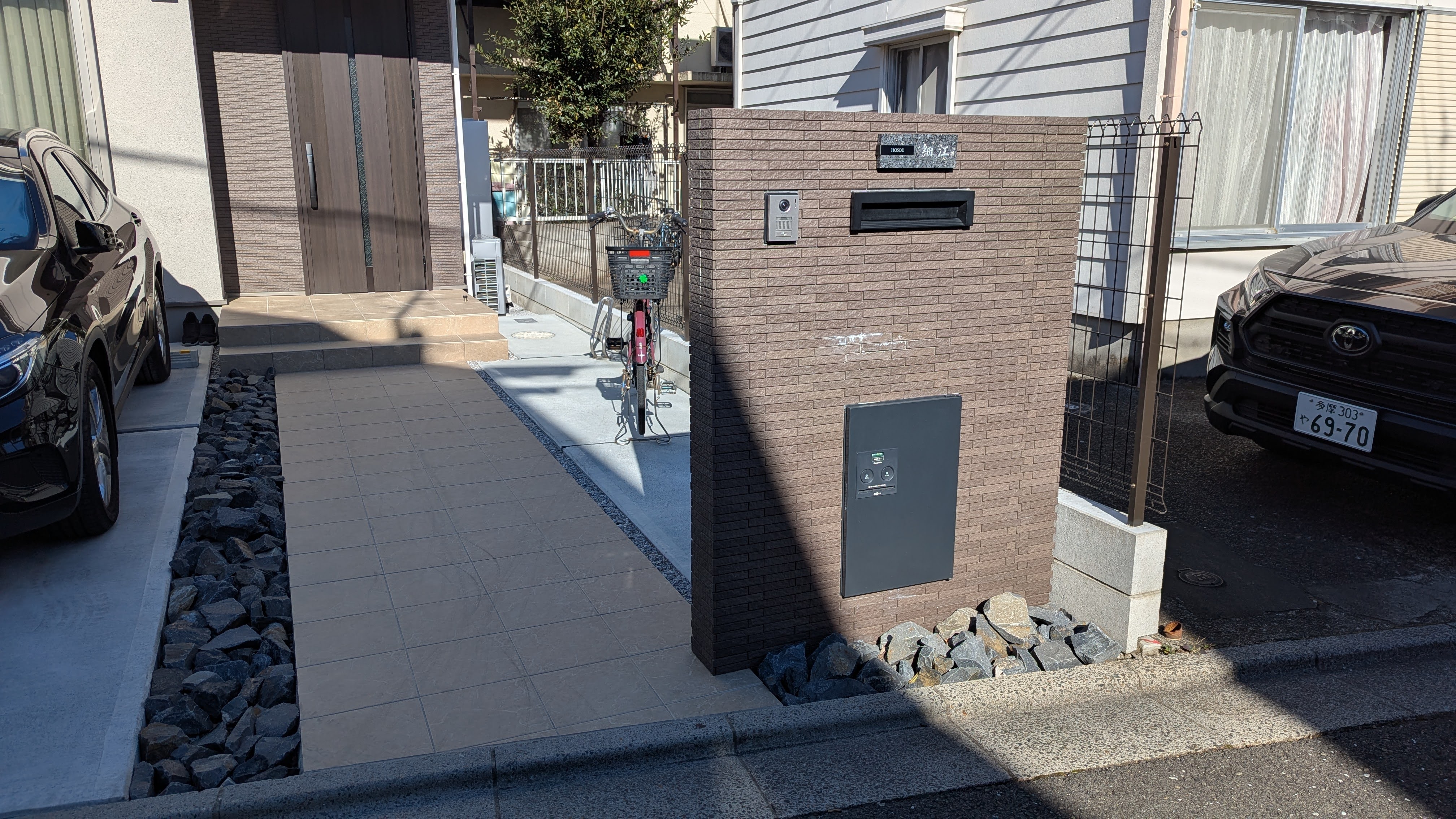
Our original design had the same model included, but I decided to change it in the end. So my problem with the original setup was that the mailbox and the parcel box would open with separate keys. So when I’m coming home, I have to get two keys out, and unlock to locks. After sharing this concern with Palgreen, they suggested a new model from Panasonic: Combo Multi (ポスト一体型宅配ボックス コンボマルチ). This solves the problem by using a pin to unlock (instead of a key) and having a single door on the back for both the postbox and the parcel box. It even has a version that has two sections for parcels, but you can also have a single, bigger section.
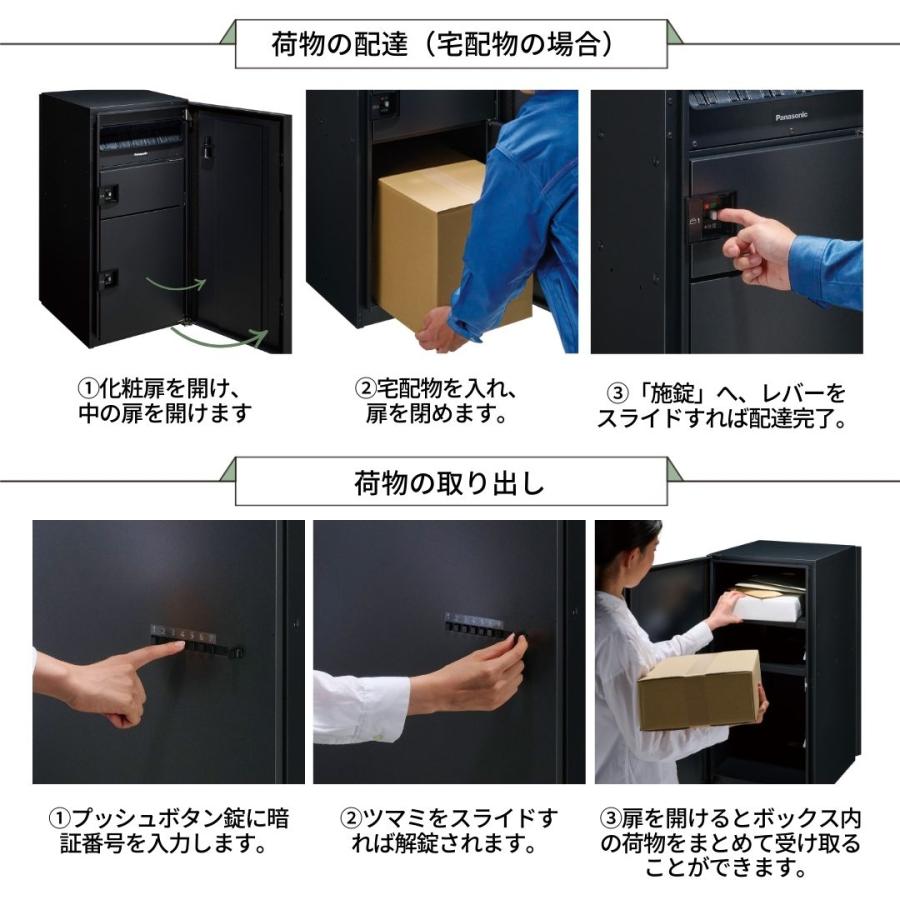
This was a 2025 model, so it was a bit more expensive than the original one, but after using it for a few months, I can confidently say that it was totally worth it. It takes me only a few seconds to check if we got mail or parcel, and it also looks better. (I really like the sleek design.)
Stroller-friendly stairs
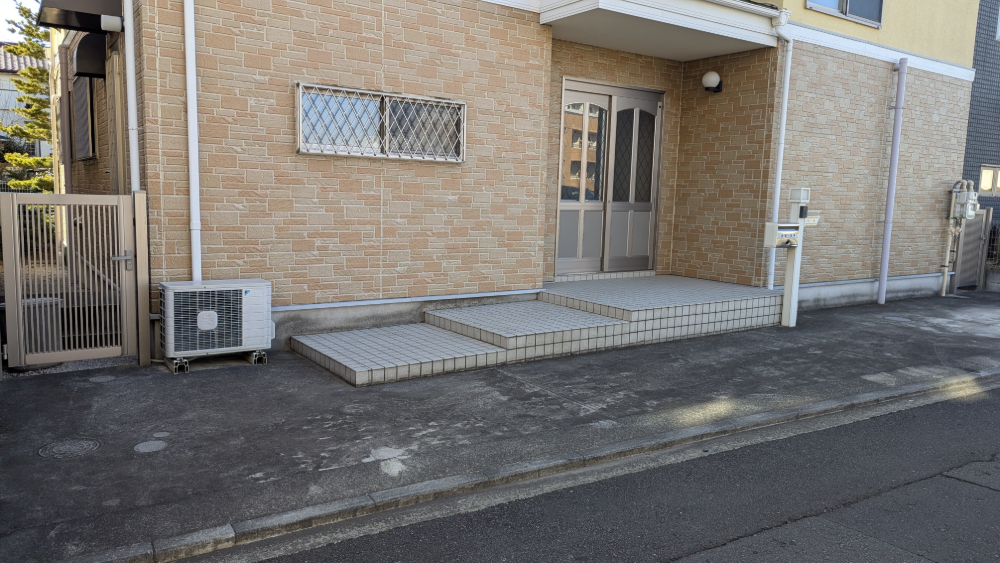
The entrance of most houses are higher than ground level, so there are usually a few steps. Combine this with a usually small genkan, and using a stroller/baby-car becomes difficult. So instead of simple stairs, we got long steps where the stroller can take one step at a time. Something like this:
Plan for bicycles
I’m a firm believer that bicycles are the best way to get around in any big city, and this is double true for kids that can’t yet drive. You might not go as far as we did with the cycle port, but at least have some plan on where the bikes will be parked. I have seen some houses where the bikes were parked around the car, and that looks pretty inconvenient for users of both the car and the bikes.
Use all available space
Gardens in Tokyo are small, which is made even worse by garden companies that are keen on covering most of it with gravel. If possible, consider building a wood deck or have some (artificial) grass instead. We got some artificial grass next to our house, and it gives the kids one more place to play.
We were considering artificial grass vs real grass, as the latter is cheaper to make, but decided with the former to reduce the ongoing work: I really don’t feel like watering and mowing a lawn that’s smaller than our living room.
Final thoughts
Overall I’m really happy that we went with Palgreen for the garden construction. Their support in designing the garden was super helpful and their ideas proving to be very useful. They did run into a few weeks delay and didn’t communicate it well, but otherwise no complaints. I would recommend them to anyone, so drop them a message if you are looking for a company like this.
