House prices are different from other things
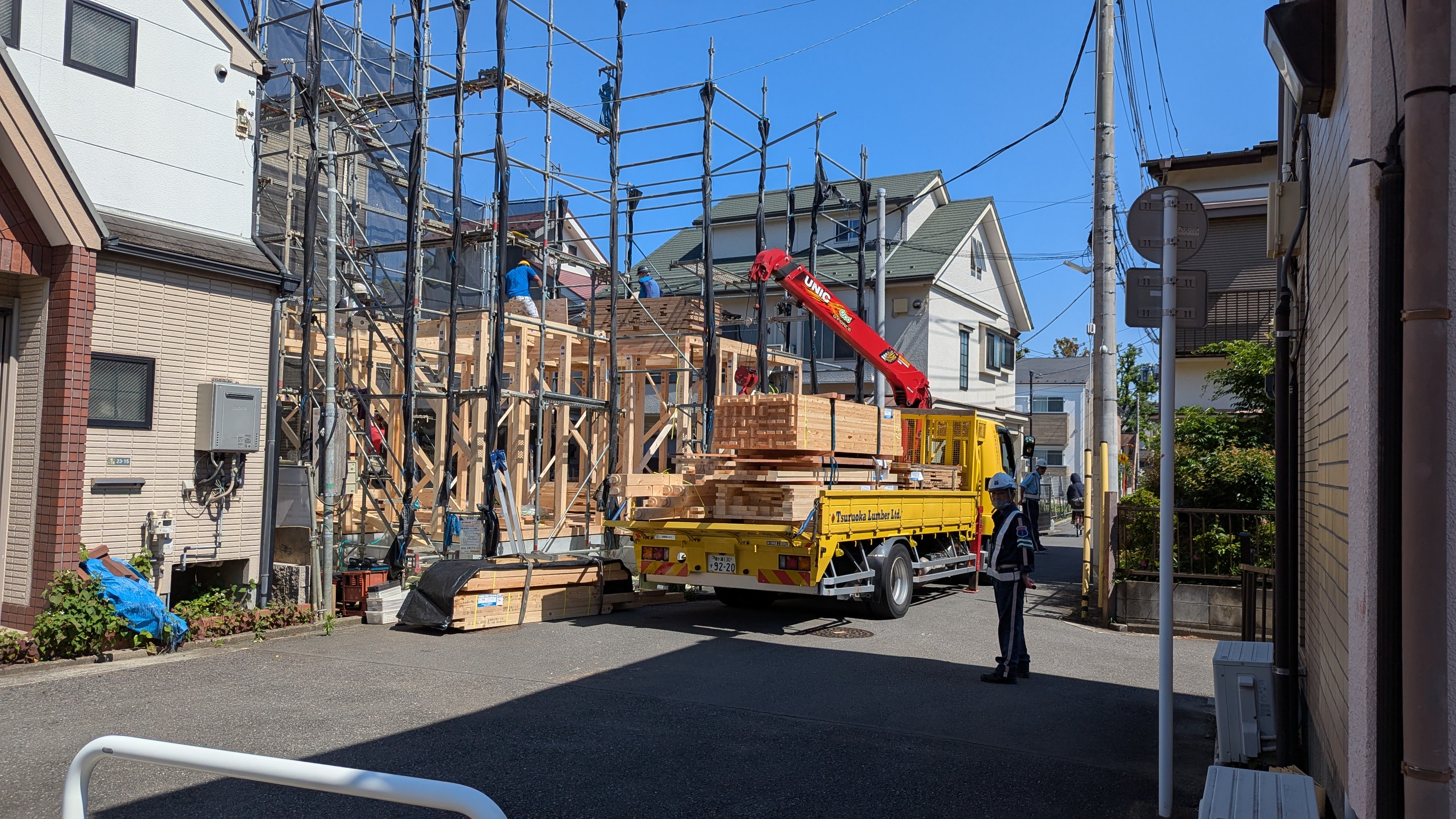
14 Jan 2026 | #money | #housing | #japanWe recently built a house in Tokyo, and it made me reflect on how house prices are different than prices of other goods.
Marginal utility
We bought a second hand Toyota minivan this year for 2.6 million yen. Buying the same model new (Toyota Voxy), it has a list price of 3.2-4 million yen. Meanwhile Toyota also makes Lexus LM, a luxury minivan going for 15-20 million yen. 4-6 times more than the Voxy.
Similarly Macbook Air starts at 164,800 yen but goes up to 258,800 yen, while Macbook Pro goes from 248,800 yen to 634,800 yen. Almost 4 times as much as the entry-level Macbook Air.
For these examples (and most stuff) the marginal utility drops fast: going from a base model to a little bit better can easily double the price, while (for most people) the utility (the value of the thing) doesn’t double.
I found that houses behave differently. There is a huge fixed cost, the land: in our case we paid 68.7 million when when buying the land and 35.6 million yen for building the house (the comparison is not perfect as the former includes all fees associated with buying the land, while the latter is only the cost of the building itself, and misses registration fees and taxes, garden constructions, etc.).
Some companies build houses of the same size for as little as 15-20 million yen. We checked some of those, and they were usually bad quality to the point of major negative effect on daily life:
- almost no insulation - cold in winter, hot in summer, always noisy, high electricity bill
- low quality finish and equipments - breaks more easily, needs to be replaced sooner, uses more electricity, less nice to use (we had some cheap ACs in previous rental apartments)
- lower build quality - gaps, structure/roof breaking sooner
Still, simply looking at the price being half as much, it wouldn’t be such a bad deal. However looking at the whole picture with the land, it would only save 10-15%. In other words by paying 10-15% more you can get a significantly better house.
Cheap houses are still being built, so some people are buying those. I think this happens when people want to live in a specific area but have a limited budget: since the land price is fixed, the only way to make it fit into their budget is to get a cheaper building. If living in the area is more important than the building quality, this can be a potential trade-off.
There is a limit to this: I have seen house makers give quotes that were higher than the price of the land in Tokyo (e.g. 100 million yen for a 150 m2 house) for fully custom houses. I would argue the marginal utility there has dropped, but maybe the main learning from this is that marginal utility is very subjective: for me going from 15 million yen to 35 million yen made sense. For others it wouldn’t make sense, or it would make sense even to go to 70 million yen.
Additional options for the house
There is a slippery slope with this thinking: when looking at additional upgrades for the house, it is easy to want to add everything. 100,000 yen for a self cleaning bathtub? 200,000 yen for the best Toto toilet? 100,000 yen for a bigger water heater tank? If one thinks in terms of 100,000 yen being only 0.1% of the overall 100 million yen budget, it’s easy to add these. But they do add up, and in the end 2-3 million yen is the same price as buying a car, so wasting that much is bad.
On the other hand some of these options are proving to be super helpful and significantly increase our daily quality of life:
- we paid 1.9 million yen for our custom kitchen - with a front-open Mielle dishwasher and Gaggenau IH cooktop. The large dishwasher saves us 10-15 minutes everyday, and the IH is really nice to use and very easy to keep clean. We both love to cook, so this is a great quality of life improvement
- we paid 130,000 yen for the self-cleaning bathtub - and we didn’t need to clean the bathtub since we moved in 2 months ago. Totally worth it, especially with kids that love to take a bath every day.
- extra storage - 262,500 yen for the attic storage, 103,000 yen for the underfloor storage. These take up so much stuff and make it easy to keep the house organized
So overall these (and many of the other options too) seem to be totally worth it. At least for us.
Cost of labor
This is the other topic I was thinking when it comes to houses.
In some sense, it’s not that houses are expensive, but rather we got really good at making things cheap by outsourcing the manual labor to countries with low income, and standardizing everything to the point where it can be made at a low cost.
Consider this: you can buy a brand new microwave oven for less than 10,000 yen (e.g. Iris Ohyama or IKEA). Both of these are sold in Japan, so fulfill the legal requirements (e.g. won’t electrocute you) and come with warranty. The price already includes the 10% VAT and the reseller’s profit, so the manufacturing and shipping costs are even less.
Still they only cost about a day’s work at the minimal wage in Japan. So if you want to have someone install it for you, that can easily be more expensive than the device: someone will have to come to your place (takes time and transportation cost) and do the installation (presumably requiring some skill that demands more than minimal wage). Add in the overhead for organizing this (sending out the quote, having people on file that can do the installation, handling reschedules or people not being home), and you can easily be looking at 8-12 hours work. Add taxes, cost of tools, insurance, and it can easily be more than the price of the microwave.
It sounds silly that we can make a fairly complex machine for less than it costs to have someone come to your house and plug it in, but this is the world we built.
Same concept applies to other things (e.g. custom size curtains). Essentially we got really good at making things for cheap as long as all units are the same (customization has a lot of overhead and makes automatization hard) and labor can be outsourced. This made everyone in developed countries more rich than before, which in turn made the labor even more expensive in those countries.
This makes locally produced and custom things more expensive. Companies are trying to solve this problem by two ways: make the custom things somewhat standardized (e.g. semi-order instead of full order) and by outsourcing part of the process to other countries.
Recently I had a black suite made and it was relatively cheap because it was only semi-order (so they would adjust the width and length of each part, but not fully tailor the entire thing for me) and the manufacturing was done in China. It took a few months, but the cost was less than half of what a suit made in Japan costs.
Ichijo also does a similar thing: they had a lot of rules about the building and they produce the pieces of the house in their factory in the Philippines, ship them to Japan, then assemble the pieces with a crane on the land.
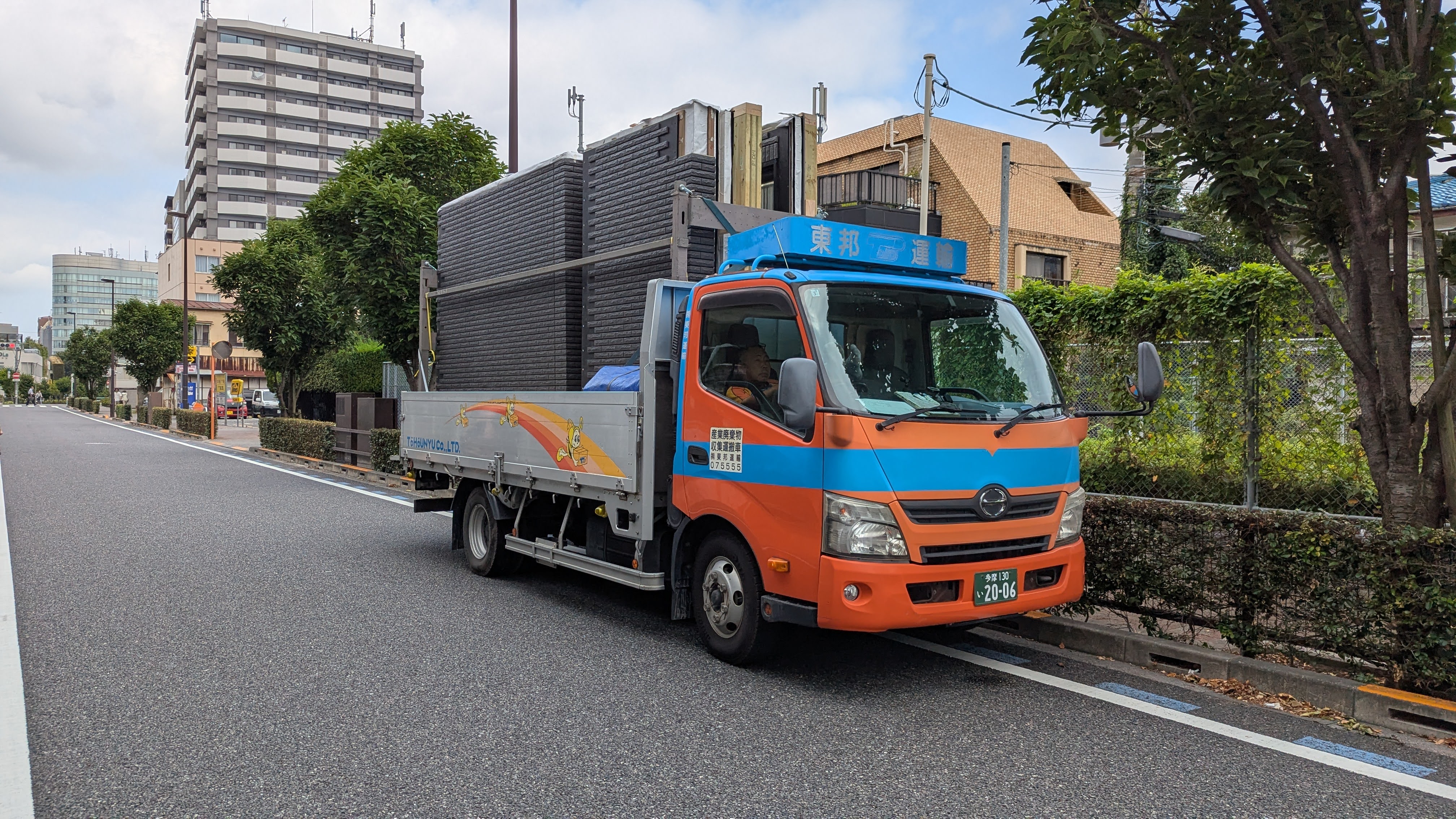
Compared to building the whole frame on the site this keeps the cost lower, but reduces some of the customizability.